
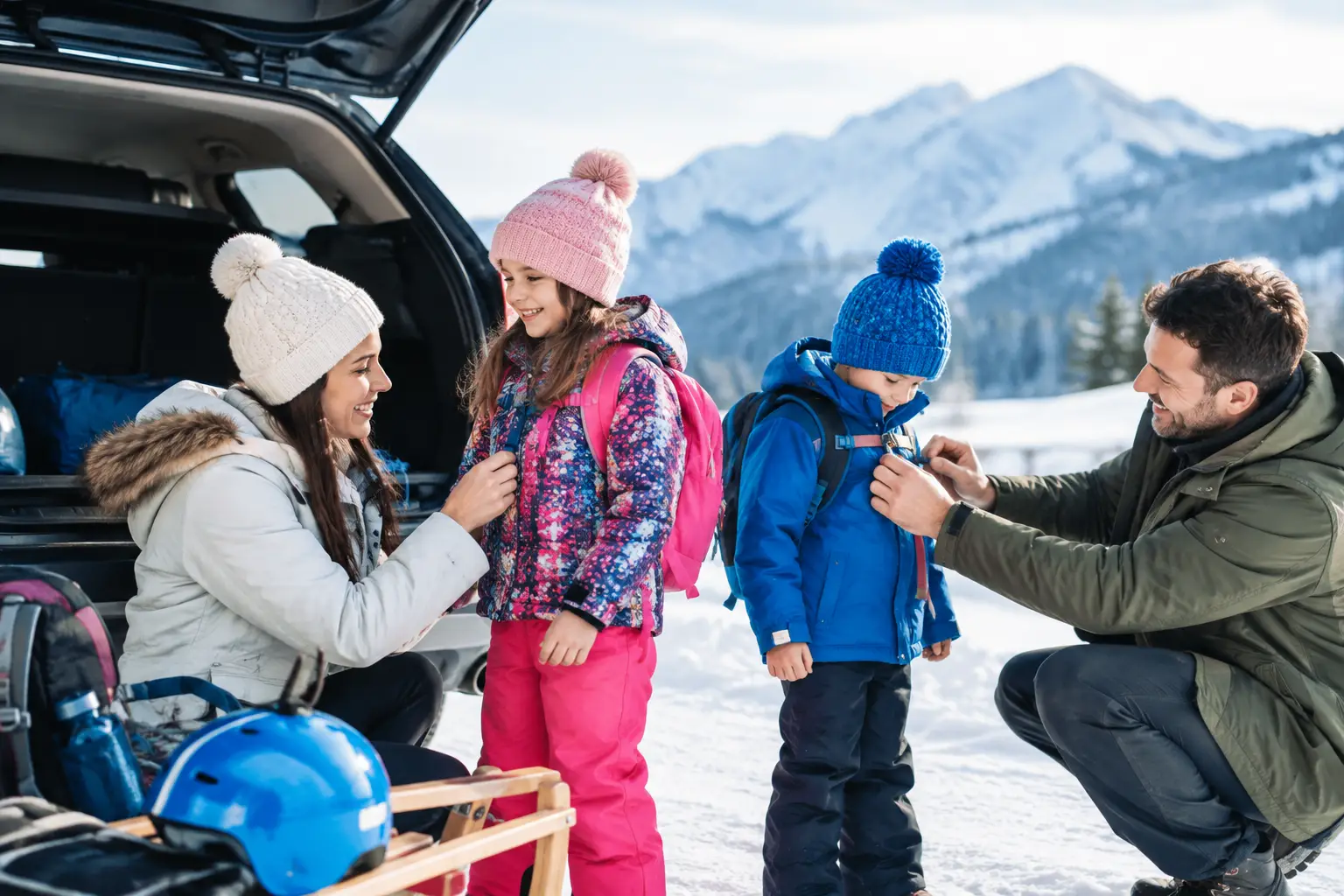
A wet glove mid-morning can put an end to a day of playing in the snow before lunch. With kids, the difference between an unforgettable day on the mountain and an exhausting experience often lies in the details of what you pack. Knowing what to bring to the slopes with kids helps keep the little ones dry, warm, and ready to enjoy lessons, outings, and their first experiences with skiing.
The most useful rule is simple: plan your trip for rapid weather changes and frequent breaks. At resorts in the Chilean Andes, the sun can be intense, the wind can make it feel colder than it actually is, and melted snow can soak clothes and boots. It’s not about packing everything in duplicate, but about choosing pieces that work well together and planning a few strategic outfit changes.
What to Pack for the Snow with Kids: Start with Layers
Snow gear shouldn’t be thought of as a single, very thick coat. The layering system allows children to adapt to the cold, physical exertion, and heated environments like hotels, restaurants, or ski schools.
The first layer is in direct contact with the skin and should help wick away moisture. Thermal tops and pants are better than cotton, which absorbs sweat and takes a long time to dry. For young children, bring at least two sets of base layers for each day of snow activities, especially if they’re still learning to control their bodies in the cold and may fall a lot.
The mid-layer is designed to provide warmth. A fleece or a light wool sweater is usually sufficient for most days. In extremely cold conditions, an extra layer may be necessary, but avoid piling on so many clothes that the child loses mobility. Whether skiing, sledding, or simply playing, being able to move comfortably is also a safety consideration.
The outer layer should block wind and moisture. Waterproof jackets and pants offer the most protection during falls, playtime while sitting in the snow, and long hours outdoors. Make sure the cuffs close tightly, the hood fits properly, and the pants cover the top of the boots.
Checklist of Essential Clothing and Accessories
Some items deserve a guaranteed spot in your bag because they’re hard to replace in the mountains or make a big difference in comfort:
- Waterproof jacket and pants, preferably designed for snow.
- Two or three thermal base layers per child, depending on the number of days on the slopes.
- A fleece, thermal sweatshirt, or light wool sweater for the mid-layer.
- Ski-specific socks or high thermal socks without thick seams.
- Waterproof gloves and a second pair for a change.
- A hat that covers the ears and a neck warmer or children’s balaclava.
- Sunglasses with UV protection or a ski goggle compatible with a helmet.
- Facial sunscreen, lip balm, and moisturizer.
Gloves deserve special attention. Wool gloves can keep hands warm, but they get damp quickly when the child touches the snow. For playing or skiing, choose waterproof gloves with a snug fit at the wrist. A second pair isn’t a luxury—it’s the quickest solution when the first pair gets wet or is lost.
Don’t underestimate the importance of sunglasses either. Altitude and the snow’s glare increase exposure to solar radiation, even on cloudy days. Children who wear prescription glasses may need a custom-fitted ski goggle, contact lenses when recommended by an ophthalmologist, or a solution specifically designed for their age group. It’s best to test these options before the trip, not during the first lesson.
What to Wear at Each Stage of the Trip
The same outfit isn’t suitable for every situation. During the transfer, inside the hotel, and during a ski lesson, needs vary significantly. Dressing your child in a full snow suit while still in Santiago or inside the car can cause them to overheat and sweat before you even reach the mountain.
| Occasion | Best choice | What to Avoid |
|---|---|---|
| Transfer and arrival | Base layer, lightweight fleece, and a jacket that’s easy to open | Very heavy jacket and ski boots in the vehicle |
| Lesson or playtime in the snow | Three layers, waterproof gloves, helmet, and goggles | Jeans, sneakers, and cotton socks |
| Break indoors | Take off your jacket and, if necessary, your fleece | Keep plenty of layers on and go back out into the cold while still sweating |
| After the snow | Dry clothes, clean socks, and comfortable shoes | Reuse damp clothing the next day |
For a child attending classes, pack a small backpack with water, a school-approved snack, tissues, lip balm, and a spare pair of gloves. Don’t fill the backpack with toys or heavy items. In the snow, adults need to have their hands free to help with zippers, equipment, and minor stumbles.
Equipment: Buy, Rent, or Bring Your Own?
For a first trip, it’s usually best to rent skis, boots, poles, and a helmet at your destination. Children grow quickly, and the correct boot fit is more important than owning your own equipment. Additionally, transporting bulky items on international flights can increase costs and complicate travel.
A helmet should be treated as an essential part of a child’s gear, not as an optional accessory. It needs to fit securely without pressing on the forehead and work well with a ski goggle. For snowboarding, the same guidelines apply, with additional attention to wrist guards, which may be recommended for beginners.
As for snow gear, it can be purchased, borrowed, or rented, depending on the length of the trip and how often the family plans to return to the mountains. The key factor isn’t the brand: it’s waterproofing, the right size, and the child’s ability to move freely. A stylish but tight jacket becomes a problem before the end of the first day.
Health and comfort items to prevent interruptions
The dry air at high altitudes can cause chapped lips, a dry nose, and increased thirst. Bring lip balm with SPF, moisturizer, and a bottle of water. Reapply sunscreen to your face before heading out and throughout the day, including your nose, ears, and under your eyes. Radiation at high altitudes isn’t determined solely by temperature.
Pack any medications your child takes regularly, prescriptions when needed, and basic items as recommended by your pediatrician. If your child has a history of allergies, asthma, or respiratory sensitivity, plan ahead and find out about access to medical care at your lodging. Do not try new medications or supplements during the trip.
Familiar snacks also help. Changes in routine, cold weather, and physical activity can increase hunger or make a child picky. Age-appropriate snack bars, dried fruit, and plain cookies are useful for the transition between activities. If your child has dietary restrictions, plan their meals before arriving at the mountain.
How to Pack Without Taking Too Much Luggage
Sort clothes by day into organizers or labeled bags. This makes the morning routine easier, especially when there’s more than one child in the room. Keep extra gloves, neck warmers, sunscreen, and socks in an easily accessible bag, as these are the items that tend to go missing most often between the hotel, transportation, and the slopes.
Pack a complete change of dry clothes for the first day on the slopes, even if your main suitcase stays in the room. If your family is traveling directly to the resort or has a tight schedule, this little bit of preparation will save you from rummaging through the bottom of your luggage. For younger children, add extra underwear and a waterproof bag to store wet items.
There’s no need to bring ski boots, a snowboard, or several heavy coats. On a well-organized trip, renting equipment locally and staying near the activities reduces what you need to carry. For Brazilian families, this planning also eases the anxiety of facing an unfamiliar climate for the first time.
Frequently Asked Questions
How many pairs of gloves should a child bring for the snow?
Two pairs of waterproof gloves are the minimum for comfort. Children fall, make snowballs, and can get their gloves wet quickly. A dry pair allows them to continue the day without discomfort.
Do children need thermal clothing even if it’s sunny?
Yes. The sun may make you feel warmer during physical activity, but the air temperature, wind, and shade still require protection. The advantage of thermal underwear is that it allows you to remove or add a mid-layer without exposing the child to the cold.
Can I wear regular winter clothes in the snow?
For short walks, it might work in mild conditions. For lessons, sledding, or playing, regular clothes tend to absorb water and don’t protect from the wind as well as waterproof gear. Always prioritize the right outer layer.
At what age can a child take ski lessons?
The minimum age varies by ski school and resort, but many accept young children in special programs. More important than age are the child’s ability to spend a few hours with instructors, their tolerance for the cold, and how well they adapt to the equipment. Be sure to confirm this information when making your reservation.
Traveling with children to the mountains requires a little more preparation, but it doesn’t have to mean a huge suitcase or a complicated routine. With the right layers, well-fitting gear, and time for breaks, the family gets what really matters: peaceful days exploring the mountains at each child’s own pace.


