
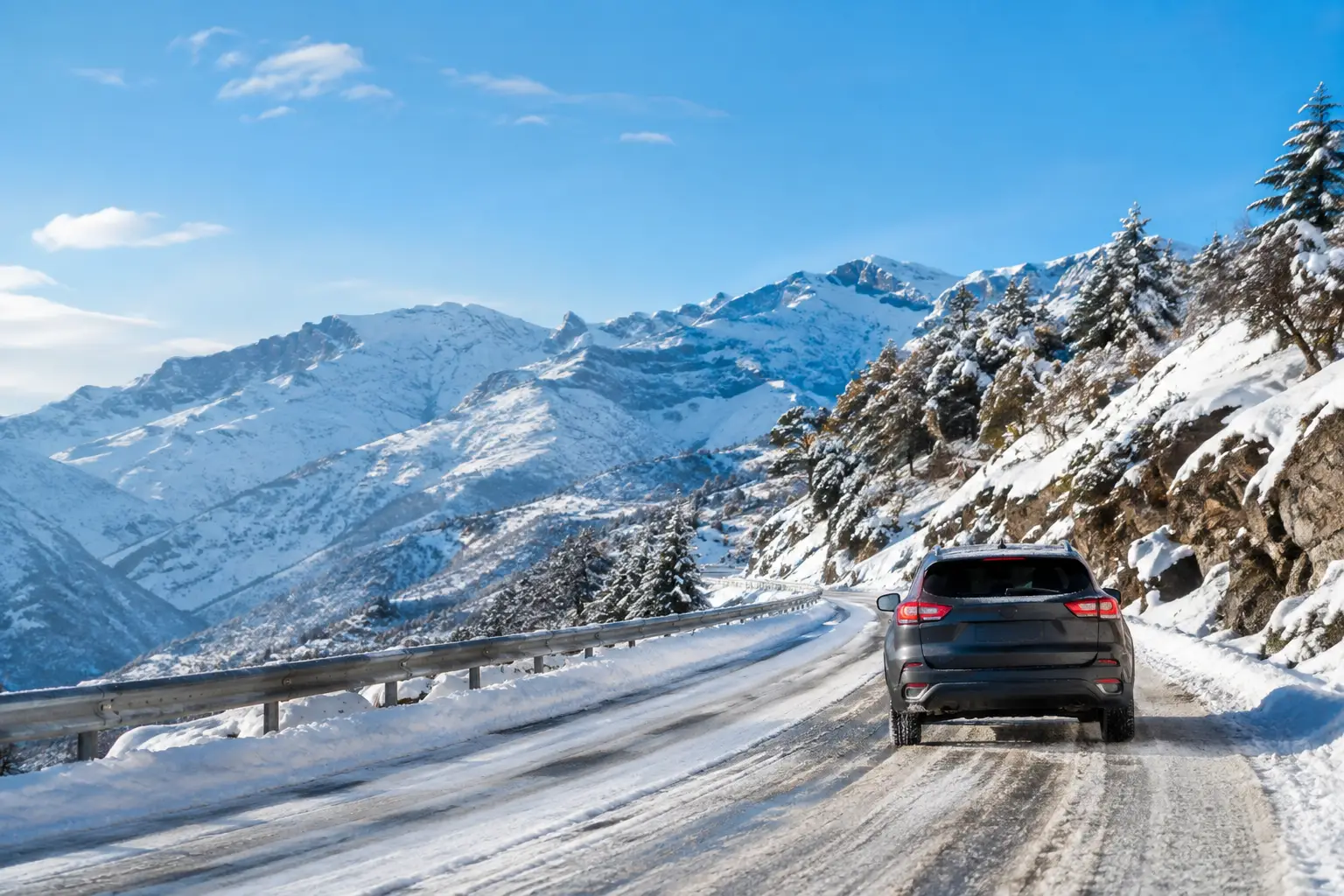
The road to Farellones in winter can turn a short trip from Santiago into a mountain adventure that requires careful planning. The route is beautiful, but snow, ice, fog, and sharp curves completely change driving conditions. For first-time visitors to Chile, the most important decision isn’t just what time to leave—it’s choosing a safe and appropriate way to make the climb.
Farellones is located in the Andes Mountains, in the region known as the Santiago Mountains. Access is via the Camino a Farellones, a mountain road with dozens of curves. It’s also the route to ski resorts such as El Colorado, La Parva, and Valle Nevado. On dry days, the road usually seems straightforward to drivers accustomed to winding roads. On a snowy day, however, the reality is quite different.
What the road to Farellones is like in winter
The climb begins at a lower elevation and quickly becomes steeper. As the vehicle moves forward, the temperature drops, and the road surface can go from dry to wet, with packed snow or patches of ice within just a few kilometers. This variation is one of the reasons why it’s not recommended to treat the route like a typical city commute.
The curves are the most striking feature. In some sections of the road, there are very sharp curves and little room for sudden corrections. When snow has accumulated, visibility of the lanes may be reduced, and tire traction is diminished. Drivers with no experience driving in snow may feel unsafe even in a high-end rental car.
The road also experiences heavy traffic on weekends, during school breaks, and after heavy snowfalls. Traffic delays, inspections, and equipment checks are common. The times for ascending and descending the mountain may be regulated by authorities depending on traffic volume and road conditions. Therefore, planning a comfortable time buffer makes all the difference.
Snow Chains: When They May Be Required
In winter, the use of snow chains may be mandatory on certain days or sections of the road. This requirement depends on weather conditions and current guidelines from local authorities. It’s not enough to simply have the chains stored in the trunk: they must be compatible with the tire size, and the driver must know how to install them correctly.
This detail catches many visitors by surprise. Putting on chains in the cold, wind, and snow—often in a busy area—is not an intuitive task. In addition, some rental cars have specific restrictions regarding driving on mountain roads or the equipment provided. Before picking up the vehicle, confirm the rental company’s policy in writing and check whether your insurance covers this type of route.
Even with chains, you should drive slowly, smoothly, and with caution. Hard acceleration, sudden braking, and abrupt changes in direction increase the risk of losing control. Chains help with traction, but they do not eliminate the effects of ice or replace the experience of driving in winter conditions.
Driving or Hiring Transportation: Which Makes More Sense?
The best choice depends on the group’s profile, the weather forecast, and the driver’s experience. For a couple with prior mountain driving experience, driving can offer flexibility with schedules. For families with children, groups with ski gear, or travelers who have never dealt with snow, a shuttle service usually provides a more stress-free experience.
| Option | May work best for | Points to Consider |
|---|---|---|
| Rental car | Travelers experienced with snowy roads and with a flexible schedule | Snow chains, insurance, parking, road conditions, and driving on curves |
| Shared transfer | Couples and small groups who prioritize cost and convenience | Fixed schedules and possible stops for other passengers |
| Private transfer | Families, groups, beginners, and those traveling with a lot of luggage | Higher cost, but with greater comfort, flexibility, and logistical support |
The transfer is especially useful when snow is forecast. A driver familiar with the route has a better understanding of checkpoints, knows how to adjust speed to conditions, and follows the day’s guidelines. For those who want to reach their hotel or the ski resort without having to deal with snow tires, chains, and parking, this is an option that streamlines the trip.
ChileanSki can coordinate private or shared transportation as part of a travel booking, which makes it easier to coordinate accommodations, arrival times, and days on the slopes. For Brazilian visitors, this support also helps overcome the language barrier in situations that require quick decisions.
Departure and return times make a difference
Leaving Santiago early is a simple step that improves your trip. In the morning, you have more time to deal with traffic, any roadblocks, and changes in the weather. You’ll also arrive at the mountain with plenty of time to pick up your gear, check in, or enjoy the slopes without feeling rushed.
Avoid leaving for the mountain until late morning on busy days. Traffic can slow down as visitors arrive to spend the day in the snow. Check the forecast the day before and on the morning of your trip, but keep in mind that weather at high altitudes changes quickly. A favorable forecast in Santiago doesn’t guarantee the same conditions in Farellones.
The return trip deserves the same attention. After a full day of skiing or playing in the snow, fatigue slows your reaction time. In the late afternoon, temperatures usually drop, increasing the chance of black ice. If you’re driving, start your descent early and don’t try to make up for delays by speeding through curves.
What to Bring in the Car or Backpack
Those driving up should bring water, snacks, extra jackets, a portable charger, and enough fuel. Cell phone reception can vary in mountainous areas, and unexpected stops are common on winter days. Sunglasses are also useful: light reflecting off the snow can be intense even when it’s cold.
When it comes to clothing, prioritize layering. A base layer, thermal insulation, and a waterproof jacket offer more protection than a single, very heavy garment worn alone. Waterproof gloves, appropriate socks, and footwear with good traction are important for walking in parking lots and areas with packed snow.
If your goal is simply to experience the snow, check in advance which activities will be available. Operating conditions may vary depending on wind, snowstorms, maintenance, and safety. For skiing and snowboarding, it’s also a good idea to book lessons, especially for beginners. Your first experience is much more enjoyable when it starts with instruction and properly fitted equipment.
Precautions to Avoid Problems on the Ascent
Don’t rely solely on GPS. The app may show the route, but it doesn’t accurately indicate whether snow chains are required, if there are temporary road closures, or if the direction of traffic has changed. The day’s operational information should always take precedence.
Also, avoid the misconception that a large vehicle solves everything. An SUV may offer more ground clearance, but inadequate tires, a lack of snow chains, or an inexperienced driver remain risk factors. Similarly, a four-wheel-drive vehicle does not exempt you from safety rules when snow chains are required.
If conditions worsen, the wisest decision may be to postpone the ascent or adjust your itinerary. A well-organized trip does not depend on sticking to an original plan at any cost. In the mountains, safety and predictability are more important than sticking to a tight schedule.
Frequently Asked Questions About the Road to Farellones in Winter
Is it dangerous to drive up to Farellones in winter?
The road demands respect, especially during snowstorms or when there is ice. With a properly equipped vehicle, the required gear, cautious driving, and attention to local rules, the trip is feasible. For those without experience driving in snow, hiring transportation is usually the most comfortable option.
Do I need snow chains to go to Farellones?
On certain days, yes. Whether they’re required depends on road conditions and official regulations. Check the conditions on the day of your trip and make sure you have the necessary equipment if you’re driving.
How long does it take to get from Santiago to Farellones?
Travel time varies depending on your starting point in Santiago, traffic, weather, and road checkpoints. Under normal conditions, allow for a few hours of travel time and plan for extra time in the winter. Avoid scheduling strict commitments immediately after the ascent or descent.
Can children go up to Farellones in the winter?
Yes, as long as they are properly dressed and have safe transportation. For families, a private transfer can be particularly convenient, as it allows for luggage, car seats when needed, and the group’s pace.
Planning the road trip is part of the snow experience, not a minor detail. When transportation, weather, and timing are considered in advance, you’ll have greater peace of mind to enjoy the snow-covered Andes landscape and the moments that truly make a winter trip special.


